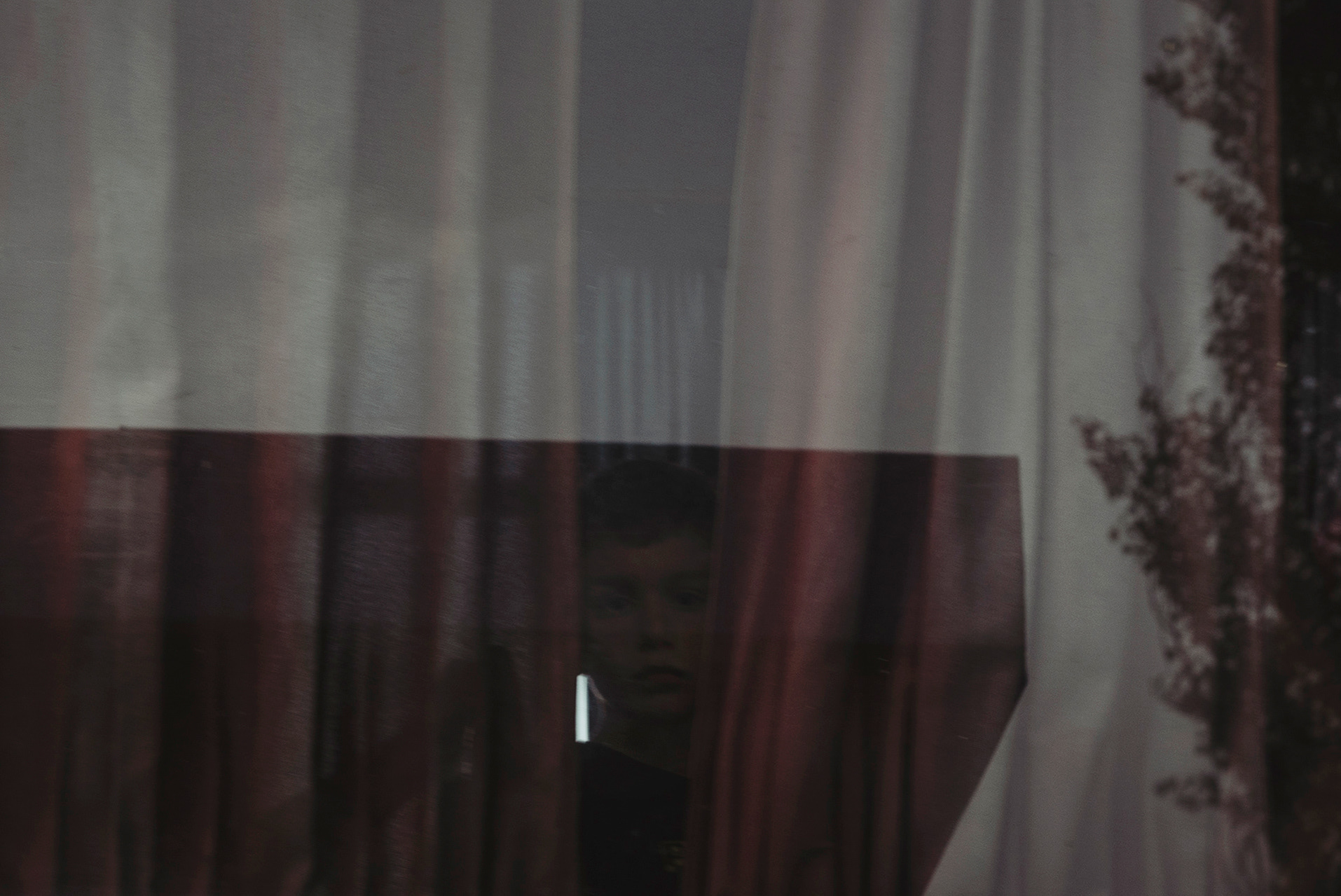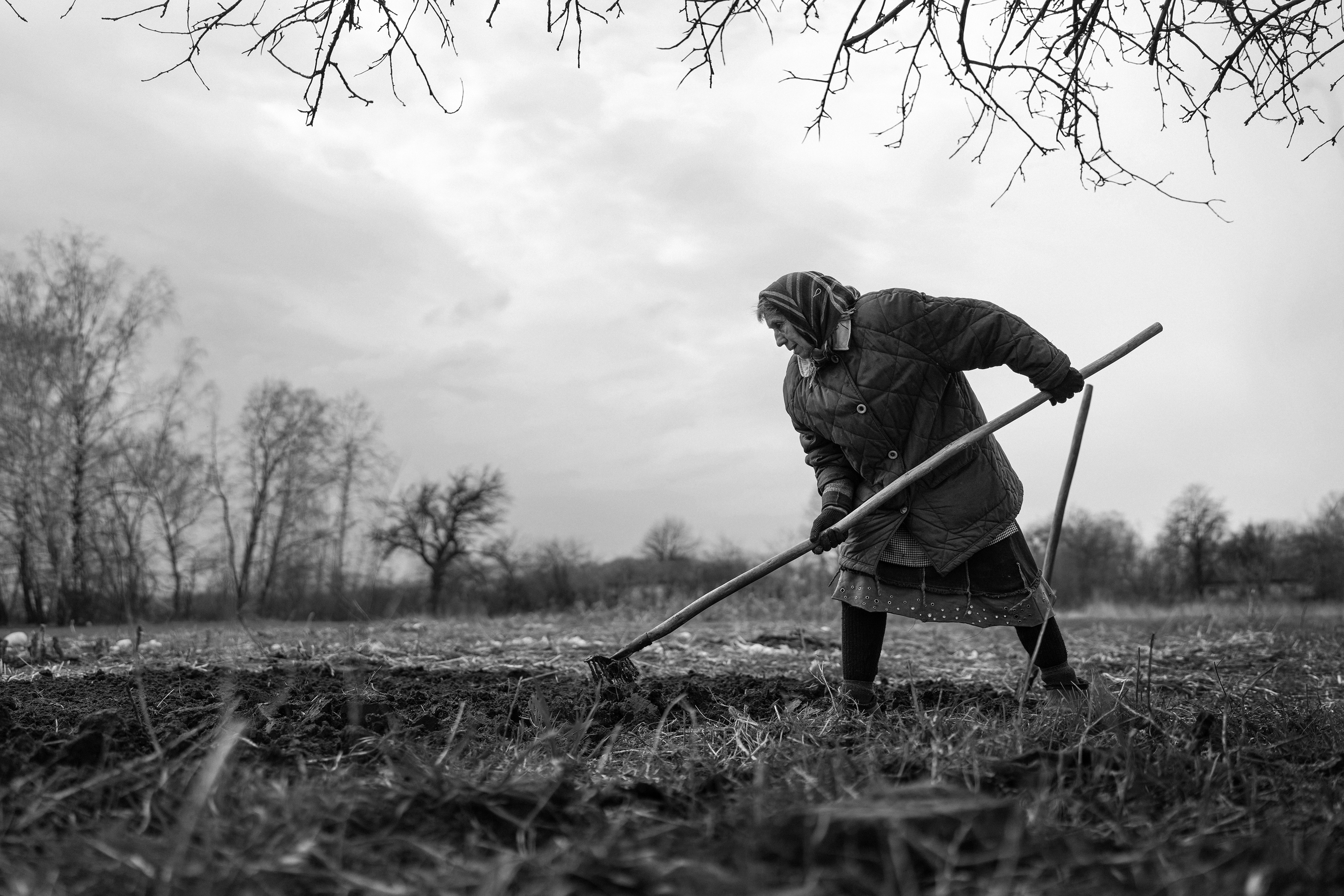
폭격으로 집을 잃은 발렌티나(70)가 들판 위에 서 있었다. 그녀는 봄이 오니 감자를 심어야 한다며 이내 땅을 파기 시작했다. 그 모습을 나는 한참이나 숨죽여 지켜봤다. 우크라이나 여정에서 가장 마음이 찡했던 순간이었다. 어떠한 상황에서도 삶을 이어가려는 저 오래된 몸짓이 결국 인류를 여기까지 끌고 온 것은 아닐까? 전쟁이 작아보이는 순간이었다. 
Valentina (70), whose home was destroyed in the bombing, stood in a field. She began digging, saying that she needed to plant potatoes because spring was coming. I watched with bated breath for a long time. It was one of the most powerful moments of my journey through Ukraine. I wondered if this age-old gesture of carrying on with life no matter the circumstances is what has brought humanity this far. It was a moment that made war seem small.
​​​​​​​
<작업 노트>

국경
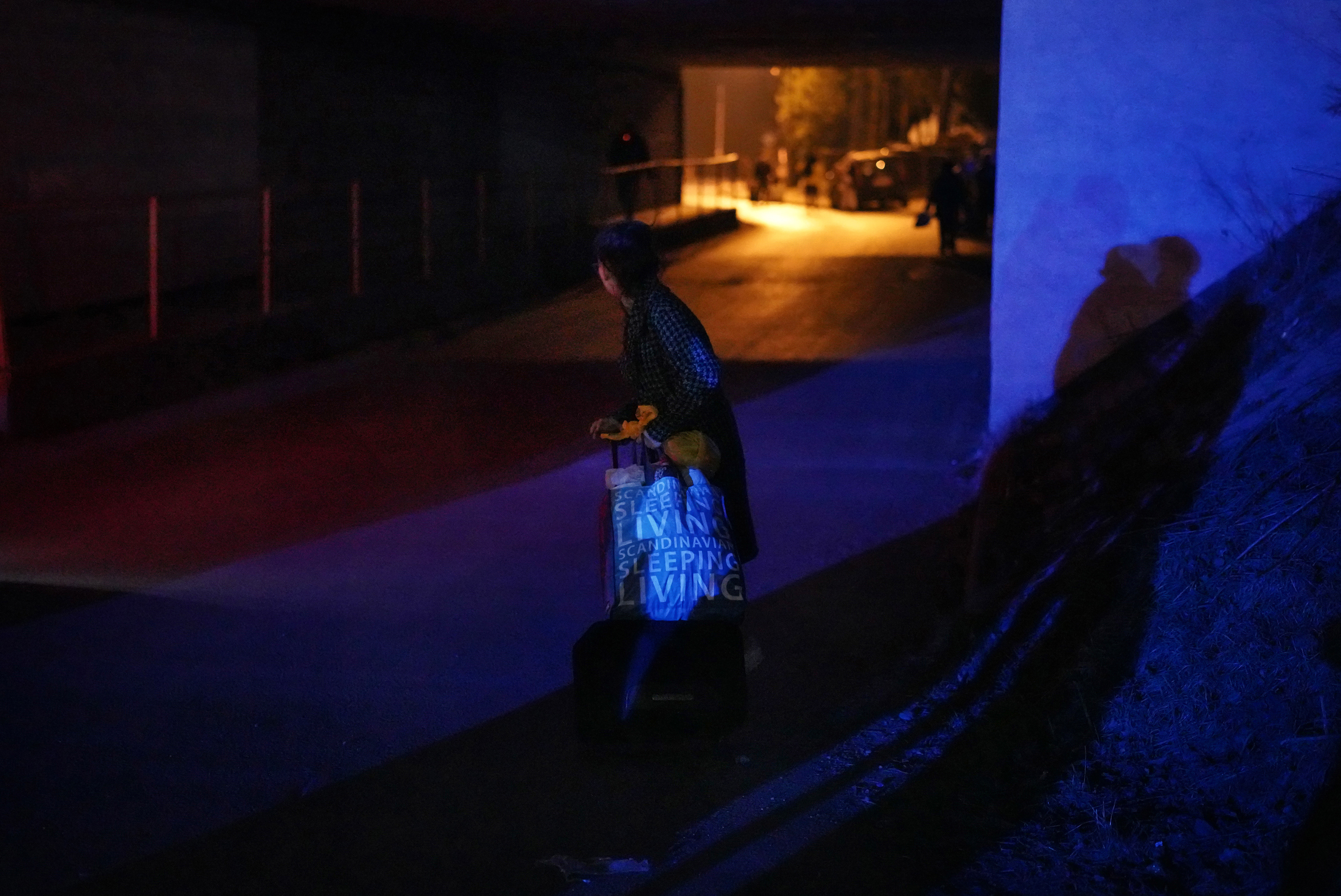
2022년 2월 24일 러시아군이 우크라이나를 침공했다. 수백만 명의 난민이 인접국의 국경으로 몰려들었다. 깊은 밤, 국경을 넘는 얼굴들이 복잡해 보였다. 무사히 위험을 벗어났다는 안도감 뒤로 타지에서 느껴야 하는 불안감이 겹쳐 있었다. 당장의 피난길이 끝났지만 타국에서의 낯선 생활은 이제 시작이었다. 갑작스런 여정에 일상은 깨어져 있었고, 며칠 간의 긴장과 선잠으로 얼굴에는 생기가 없었다. 당장 어디로 가야 할지 언제 돌아갈 수 있을지 알 수 없다는 사실이 이들을 괴롭혔다. 슬픔과 절망을 드러내는 표정도 쉽게 보이지 않았다. 생존해야 하는 눈빛은 그럴 여유가 없었다. 전화기를 움켜쥐고 예민하고 잔뜩 긴장한 얼굴들이 그때 그 국경 위에 있었다.

키이우 익스프레스
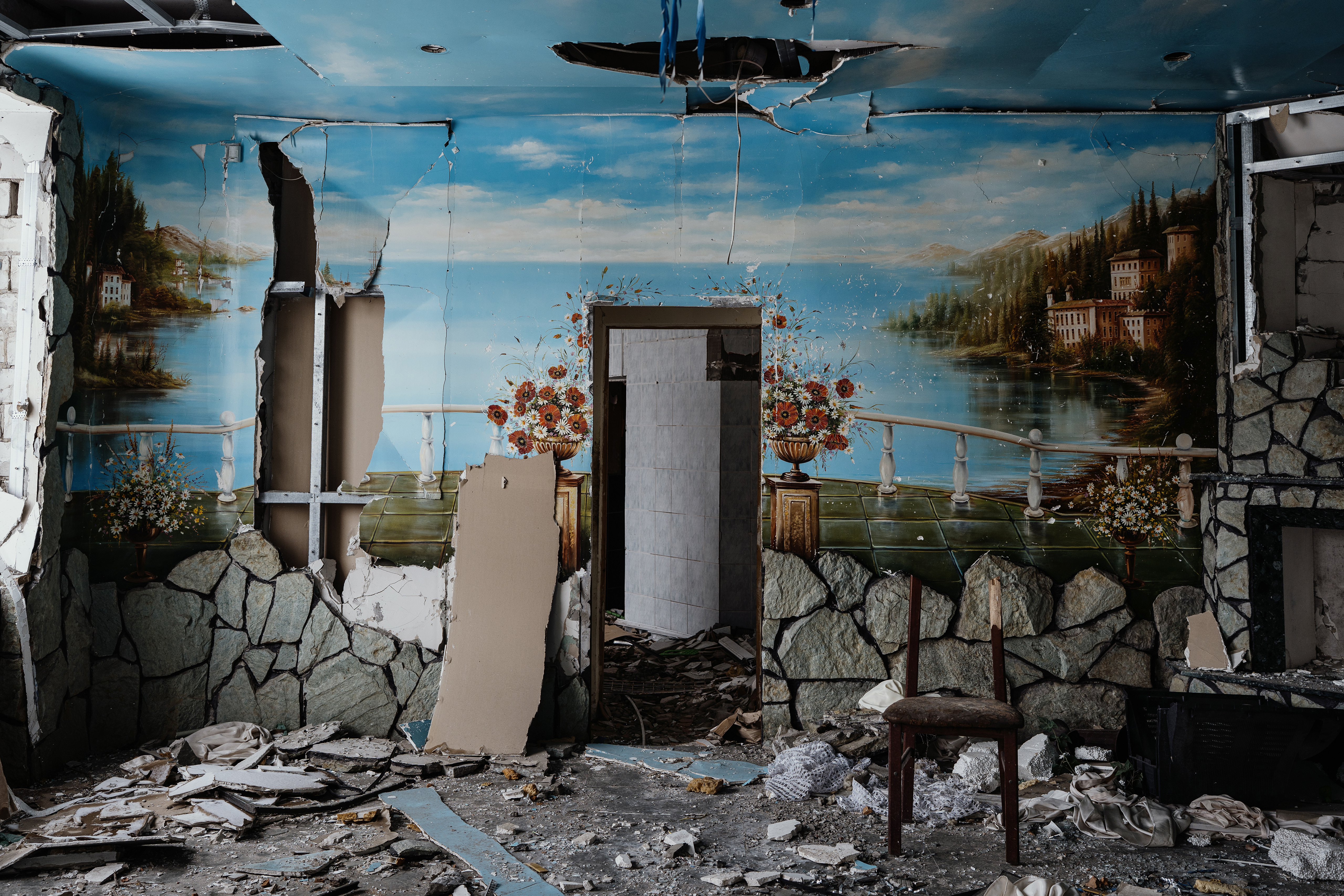
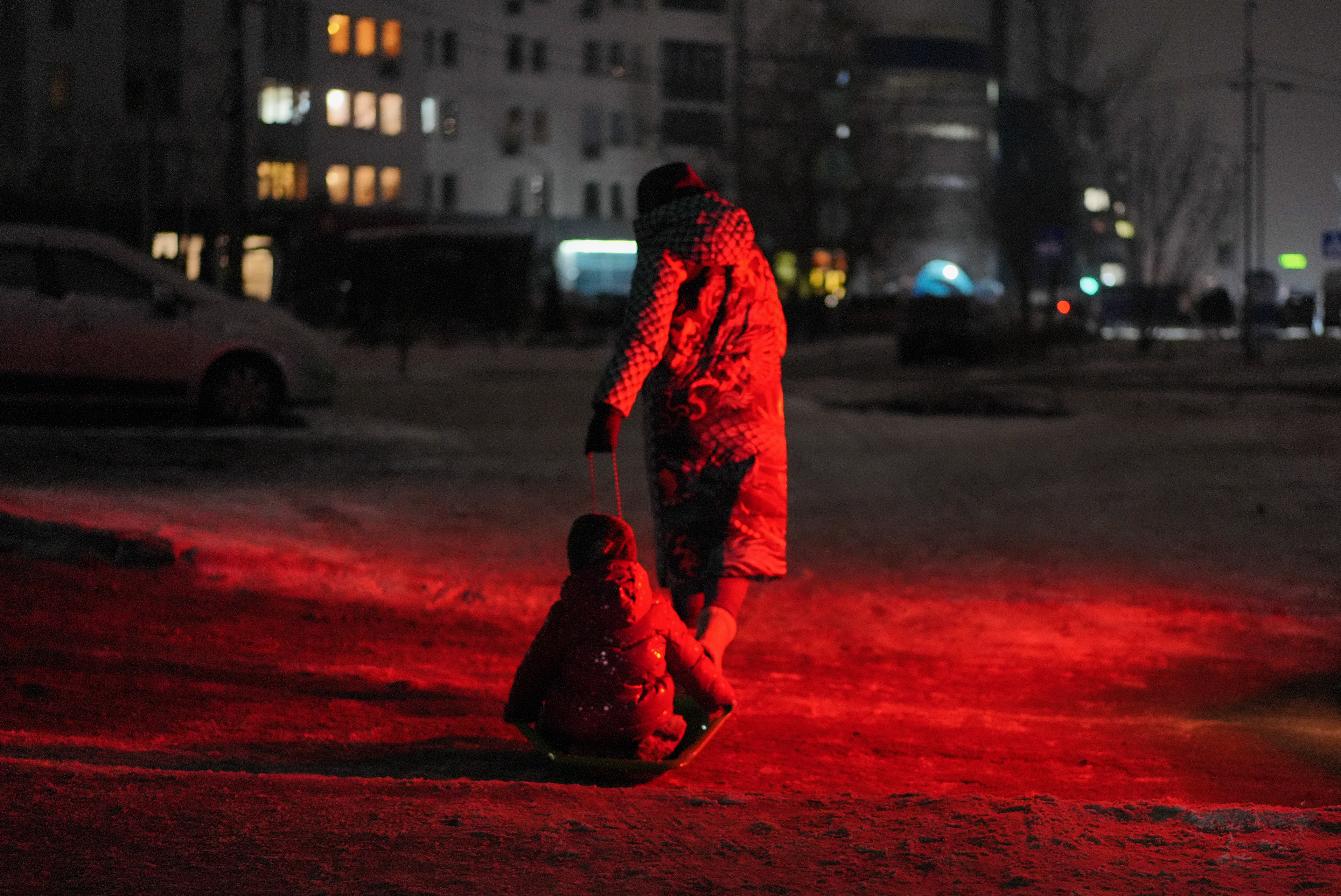
바르샤바를 출발한 기차는 18시간만에야 키이우에 닿았다. 키이우 외곽은 곳곳이 폐허였다. 폐허를 본다는 것은 폐허가 되는 과정을 상상하게 되는 일이었다. 그 속에서 살아가는 사람들을 만나는 일 역시 짐작하기 힘든 비참함을 헤아려 본 뒤에야 가능한 일이었다. 폭격 받은 아파트엔 빨래가 널려 있었고 사람들은 불탄 자동차 사이를 지나며 안부 인사를 나눴다.

뿌리 깊은 삶의 역사
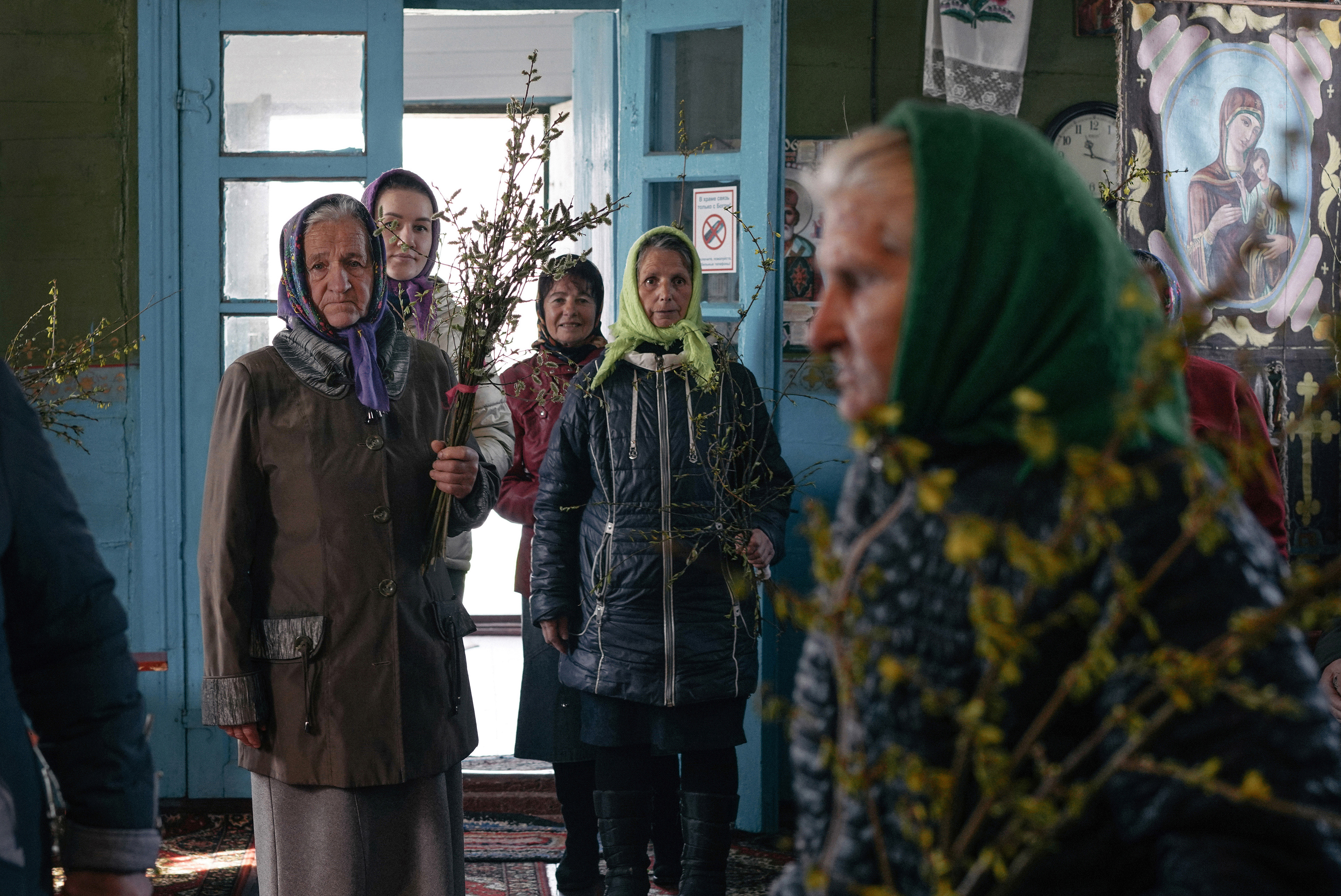
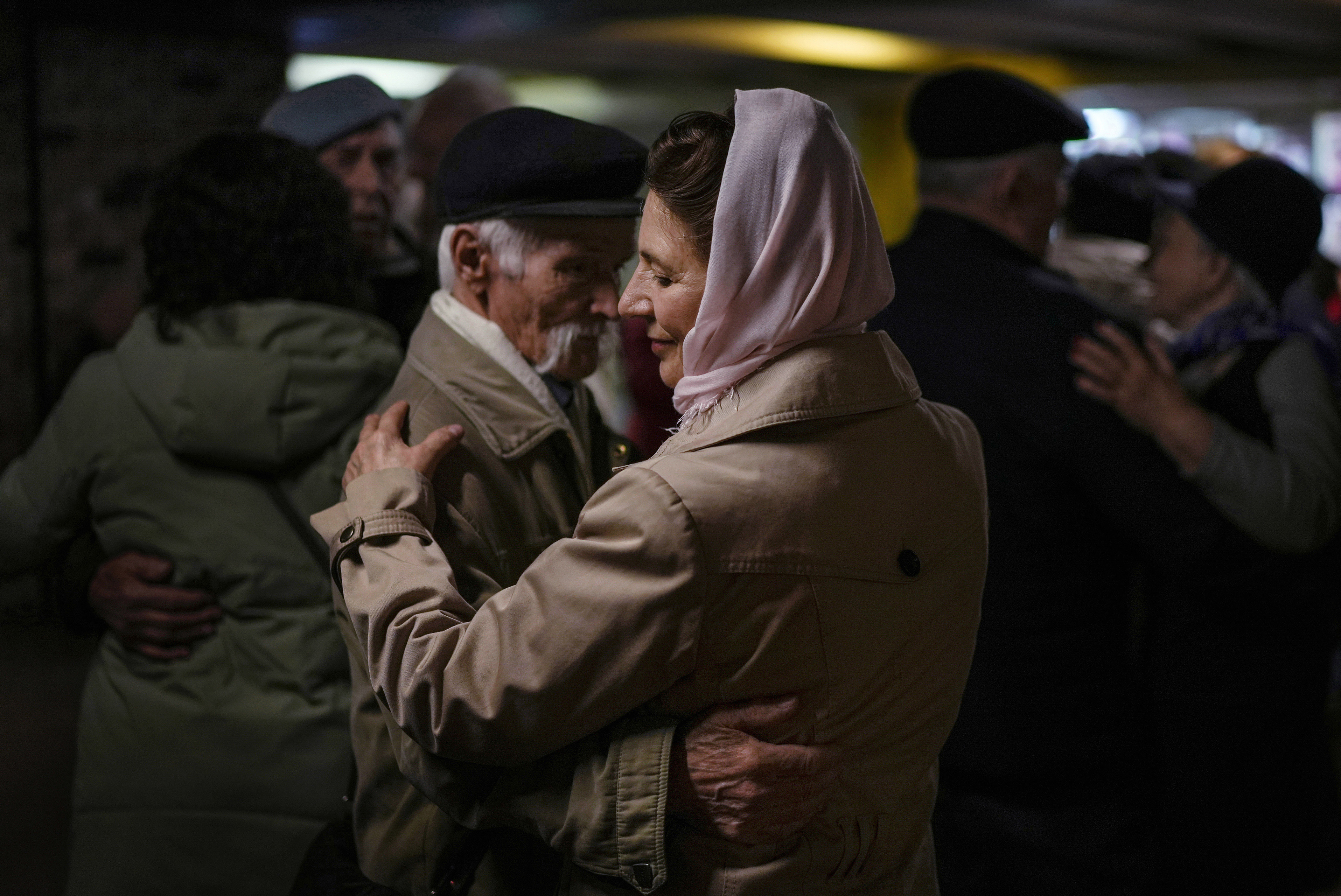
전쟁은 총알과 미사일만이 아닌 평범한 사람들의 삶으로도 기록돼야 한다. 소수의 권력자가 일으킨 비극은 수많은 사람들의 머리 위로 재앙처럼 쏟아졌지만, 그들 모두의 삶을 끝내 어쩌지는 못했다. 키이우의 지하철역에서 다시 열정적인 춤을 추던 사람들과, 집과 가족을 잃고도 봄의 들녘에서 감자 심을 땅을 일구던 발렌티나 할머니의 힘 있는 몸짓 앞에서 전쟁은 작아보였다. 인류는 그렇게 여기까지 왔을 것이다. 일요일, 미사를 마친 사람들의 손에는 오랜 시간 그들의 삶을 위로했을 성수가 뿌려진 버드나무 가지가 들려 있었다. 길어진 전쟁은 분명 우크라이나인들의 삶에 깊이 배어들어 있었다. 그러나 일상 속 전쟁의 풍경을 보려 하면 할수록 오히려 전쟁을 작아보이게 만든 작고 강인한 삶들이, 그들의 뿌리 깊은 삶의 역사가 눈에 들어왔다.

길 위에서
차를 몰았다. 길 끝마다 울컥하게 만드는 순간들이 있었다. 매일의 발길이 어디로 향할지 알 수 없는 정처 없는 나날과 우연한 만남들이 이어졌다. 나는 헤매고 있었는지도 모른다. 길 위와 가슴 속에서 많은 것들이 사라지고 생겨났다.
이 여정은 내가 마주친 어떤 순간들에 대한 이야기다. 어떤 눈빛이, 어떤 공간이 나를 멈춰세웠다. 나는 뭔지 모를 아련한 느낌마다 셔터를 눌렀다. 어쩌면 희미하고도 강렬한 어떤 생명력을 느끼고 싶었는지 모른다. 눈에 밟힌다고 말해 온 그것들이 내 안의 어떤 감정을 드러내는 것일지도 몰랐다. 희미한 것들이 갖는 선명함이 있다. 말로는 표현하지 못할 어떤 어슴푸레한 것들이지만 그것들이 갖는 의미는 희미하지 않다.

The Border
On February 24, 2022, the Russian army invaded Ukraine. Millions of refugees streamed toward neighboring borders. In the deep of night, the faces crossing the border held a complex gaze. Layered above the relief of escaping immediate danger was the anxiety of an uncertain life in a foreign land. A grueling journey of days had ended, but a strange, unfamiliar existence was just beginning. Daily routines were shattered by sudden departure; faces were hollow, drained of vitality from days of tension and sleeplessness. The agonizing reality of not knowing where to go, or when they might return, weighed heavily on them. Expressions of grief or despair were rarely visible; eyes focused entirely on survival had no room for such luxuries. Gripping their phones, tense and hyper-vigilant, those faces stood upon that border.

Kyiv Express
The train from Warsaw took 18 hours to finally reach Kyiv. The outskirts of the city were punctuated by ruins. To look at ruins is to imagine the violent process of their destruction. To meet the people living inside them requires fathoming a misery difficult to measure. Yet, life persisted: laundry hung from bombed apartment balconies, and neighbors exchanged daily greetings as they walked between charred cars.

The Rooted History of Life
War must be recorded not only through bullets and missiles, but through the daily lives of ordinary people. The tragedy instigated by a powerful few rained down like a catastrophe over the heads of many, yet it could not ultimately conquer them. Before the people dancing with fervor once again in the Kyiv subway stations, and the powerful gestures of Grandma Valentina—who tilled the spring fields to plant potatoes despite losing her home and family—the war shrunk. Humanity must have come this far in just such a way. On Sunday, worshippers leaving Mass held wet willow branches (Verba) in their hands—pieces of nature that had long consoled their existence. The prolonged war was clearly etched deep into Ukrainian life. Yet, the more I looked for the landscapes of war in their daily routines, the more I witnessed the small, resilient lives that eclipsed the grand tragedy—the deep-rooted history of their endurance.

On the Road
I drove. At the end of every road, there were moments that struck a deep, emotional chord. Vagabond days, accidental encounters, never knowing where each day's steps would lead… perhaps I was simply wandering. Many things vanished, and many things emerged.
This journey is a story about those specific moments of confrontation. A certain gaze, a particular space, made me halt. I pressed the shutter at every faint, inexplicable sensation. Perhaps I wanted to feel a certain vitality—dim yet fierce. Maybe the things I describe as "lingering in my eyes" reveal a certain inner lyricism. There is a clarity held by faint things. They are dim, nebulous elements that defy verbal expression, but the meaning they carry is not faint at all.

You may also like

Back to Top